


📋 In This Article
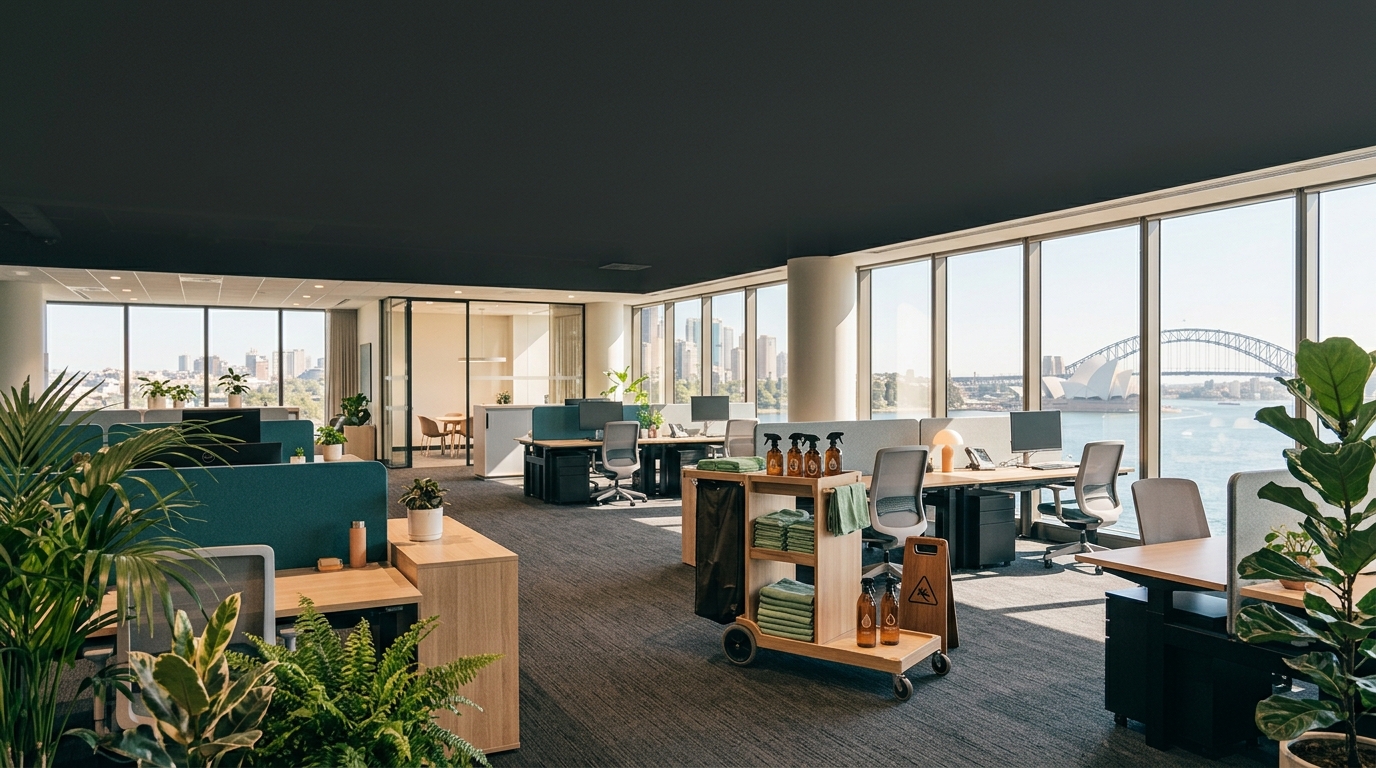
Eco-friendly office cleaning uses non-toxic, low-impact cleaning products and methods that are safer for staff, occupants and the environment — without sacrificing cleaning quality. Genuine green cleaning means certified low-toxicity products, microfibre systems that cut chemical use, concentrated formulas that reduce packaging and transport, and responsible waste practices. “Eco-friendly” only means something when it’s backed by specifics, not just a green label.
The term gets used loosely, so here’s what actually qualifies, who needs it most, and how to tell real green cleaning from marketing.
What Makes Office Cleaning Genuinely “Eco-Friendly”
Real eco-friendly cleaning shows up in four concrete places:
- Certified low-toxicity products — cleaning agents independently assessed for reduced environmental and health impact, rather than products simply labelled “natural.”
- Microfibre cloths and mops — capture dust and grime with water alone in many cases, cutting the volume of chemicals needed.
- Concentrated, correctly diluted formulas — less packaging, less transport weight, and no over-use of product.
- Responsible waste and recycling — proper separation and disposal, and reduced single-use plastics in the cleaning process itself.
You’ll notice none of these is a color or a logo — they’re methods and materials. That’s the test.
Why It Matters More in Some Offices Than Others
Eco-friendly cleaning is healthier for every workplace, but in some settings it’s close to essential:
- Childcare & education — children are more sensitive to chemical residues and spend the day close to floors and surfaces.
- Medical & allied health — patients include the elderly, the unwell and the immune-compromised, where harsh residues are a genuine risk.
- Aged care — the same sensitivity applies, alongside strict hygiene requirements.
- Enclosed or poorly ventilated offices — where strong chemical fumes have nowhere to go and can affect staff comfort and focus.
Because indoor air quality affects both health and concentration — a link we cover in the benefits of a clean office — reducing airborne chemical residues isn’t just an environmental choice, it’s a workplace-performance one.
Does Eco-Friendly Cleaning Cost More?
Generally, no. Concentrated products and microfibre systems are cost-effective in practice, and any small difference is usually offset by efficiency. Eco-friendly cleaning is a standard part of our office cleaning service rather than a premium add-on — see the full breakdown in our office cleaning price guide.
How to Spot Greenwashing
Not every “green” claim holds up. Watch for:
- Vague labels — “eco,” “natural” or “green” with no certification or specifics behind them.
- No product transparency — a provider who can’t tell you what they actually use.
- A single token product — one green spray while everything else is conventional.
- Claims with no method — sustainability that stops at marketing and never reaches how the work is done.
When you’re comparing providers, ask exactly what products and methods they use — it’s one of the questions in our guide to choosing an office cleaning company. A genuine operator will answer without hesitation.
FAQ
What is eco-friendly office cleaning? It’s cleaning that uses non-toxic, low-impact products and methods — certified low-toxicity agents, microfibre systems, concentrated formulas and responsible waste practices — that are safer for staff and the environment while still delivering a thorough clean.
Is eco-friendly cleaning as effective as regular cleaning? Yes. Modern low-toxicity products and microfibre systems clean to the same standard as conventional methods. Effectiveness comes from the process and the people, not from harsh chemicals.
Does green office cleaning cost more? Usually not. Concentrated products and reusable microfibre are cost-effective, so eco-friendly cleaning is typically priced in line with conventional cleaning rather than as a premium.
Which businesses need eco-friendly cleaning most? Childcare, education, medical, allied health and aged-care settings benefit most, because occupants are more sensitive to chemical residues. Enclosed or poorly ventilated offices also gain from reduced airborne chemicals.

← Previous
After-Hours Office Cleaning: Why Smart Businesses Clean Outside 9–5
Next →
Cleaning Standards in Aged Care: Infection Control, Clean Zones and Compliance
Leave a Reply